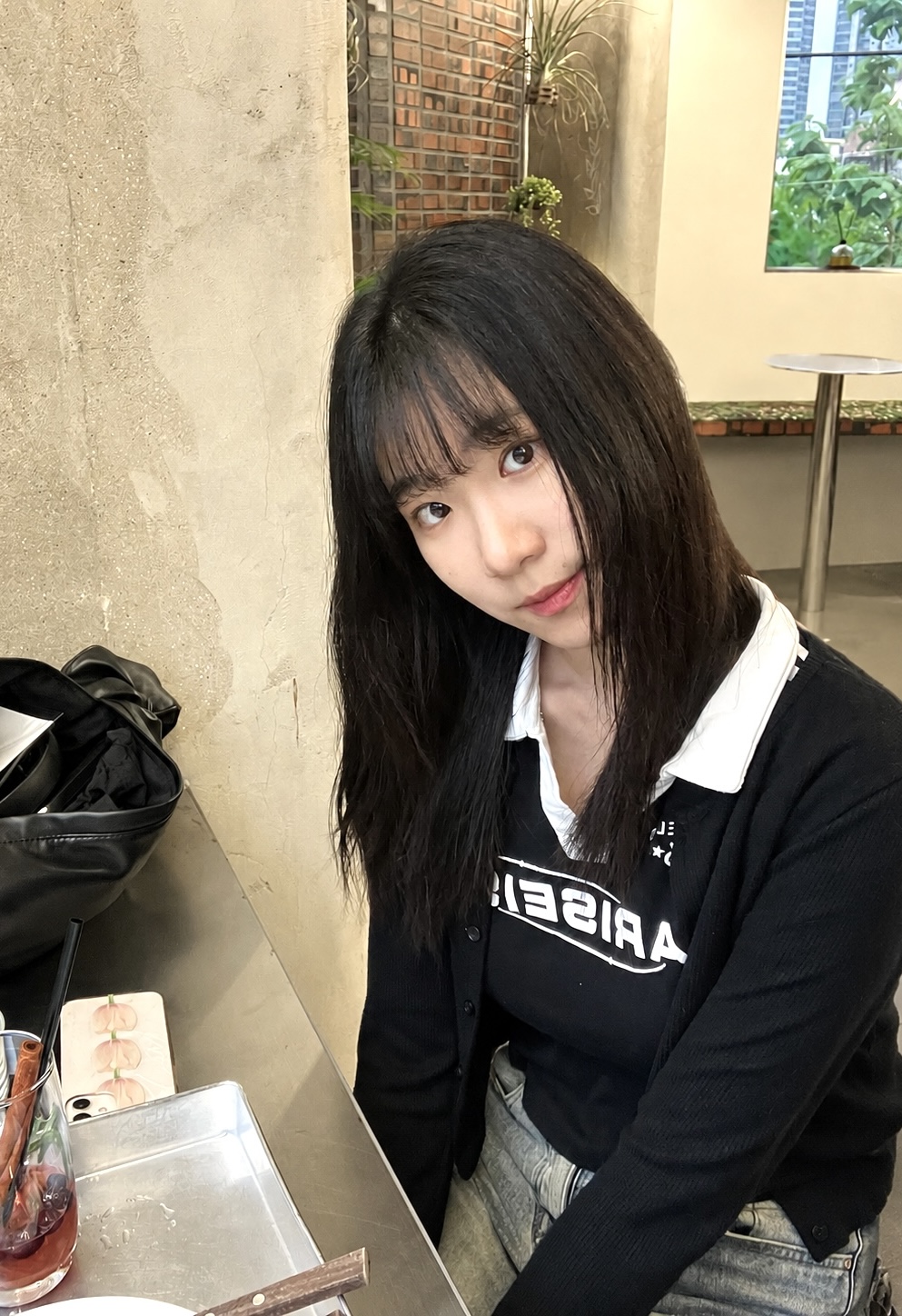
Computational Psychiatry · Decision Making
Juha Lee
I am an M.A. student in the Computational Clinical Psychology Lab at Seoul National University. Using computational approaches, I investigate how learning, belief formation, and decision-making are altered in psychiatric disorders.
About Me
I am an M.A. student in the Computational Clinical Psychology Lab, Department of Psychology, Seoul National University.
My research focuses on computational psychiatry, belief formation, reinforcement learning, and decision making in psychiatric disorders.
Affiliation
Computational Clinical Psychology Lab
Department of Psychology
Seoul National University
Research Areas
Computational Psychiatry
Decision Making
Social Learning
Reinforcement Learning
Cognitive Neuroscience
Research
Do individuals with bipolar disorder exhibit beliefs that the environment changes rapidly?
Recent studies have suggested that mood instability in bipolar disorder (BD) arises from altered computational processes underlying decision making, emphasizing the importance of developing and testing formal computational accounts of mood instability and identifying which alterations in computational parameters characterize mood fluctuations in BD.
Although several computational components, such as reward perception and learning rates, have been extensively investigated, the role of volatility—higher-order beliefs about how rapidly the environment changes— has remained largely unexplored in BD.
To address this gap, we investigated whether individuals with type-I BD exhibit altered volatility inference in dynamically changing environments using a probabilistic reversal learning task and a probability tracking task, analyzed with the Hierarchical Gaussian Filter.
View Poster →Do individuals with unclear self-concepts readily accept self-referential social information from others, increasing their vulnerability to social anxiety symptoms?
Previous studies have consistently found that low self-concept clarity—how clearly individuals define themselves—is associated with higher social anxiety symptoms, yet the underlying mechanisms have not been empirically tested.
To address this gap, I tested the hypothesis that individuals with low self-concept clarity readily accept self-referential social information from others, increasing their vulnerability to social anxiety symptoms using a probabilistic learning task in which a character evaluated either the participant or a stranger.
Computational modeling using the Hierarchical Gaussian Filter revealed that individuals with low self-concept clarity exhibited higher tonic volatility only in the self-evaluated condition, which was associated with higher social anxiety symptoms.
View Poster →Publications
-
Lee, J. H., Jeong, J. W., Busemeyer, J. R.,
O'Donnell, B. F., & Ahn, W.-Y.
Overestimated Environmental Volatility Underpins Aberrant Decision Making in Type-I Bipolar Disorder. Manuscript in preparation.
-
Lee, H. M., Jeon, J. W., Lee, J. H., Shim, W. M., & Ahn, W.-Y.
Naturalistic foraging reveals latent signatures of value-guided exploration during nicotine abstinence. Manuscript in preparation.
Conference Presentations
-
Lee, J. H., Jeong, J. W., Busemeyer, J. R.,
O'Donnell, B. F., & Ahn, W.-Y. (2026, July).
Overestimated Environmental Volatility Underpins Aberrant Decision Making in Type-I Bipolar Disorder. Poster to be presented at the 2026 Computational Psychiatry Conference, Yale University, New Haven, CT, USA. -
Lee, J. H., & Ahn, W.-Y. (2024, December).
The Effect of Self-Concept Clarity on Social Evaluative Information Learning: A Computational Approach. Poster presented at the Brain, Mind, & Behavior Symposium, Seoul National University, Seoul, South Korea.
Gallery
News
I will present a poster on bipolar disorder at the Computational Psychiatry Conference at Yale University.
Joined the Computational Clinical Psychology Lab at Seoul National University as an M.A. student in Clinical Psychology.
Won Second Prize at the Brain-Mind-Behavior Symposium for research on self-concept clarity and social evaluative information learning.
Contact
Email: juhajulia@snu.ac.kr
GitHub: github.com/juhajulia
CCS Lab: ccs-lab.github.io